


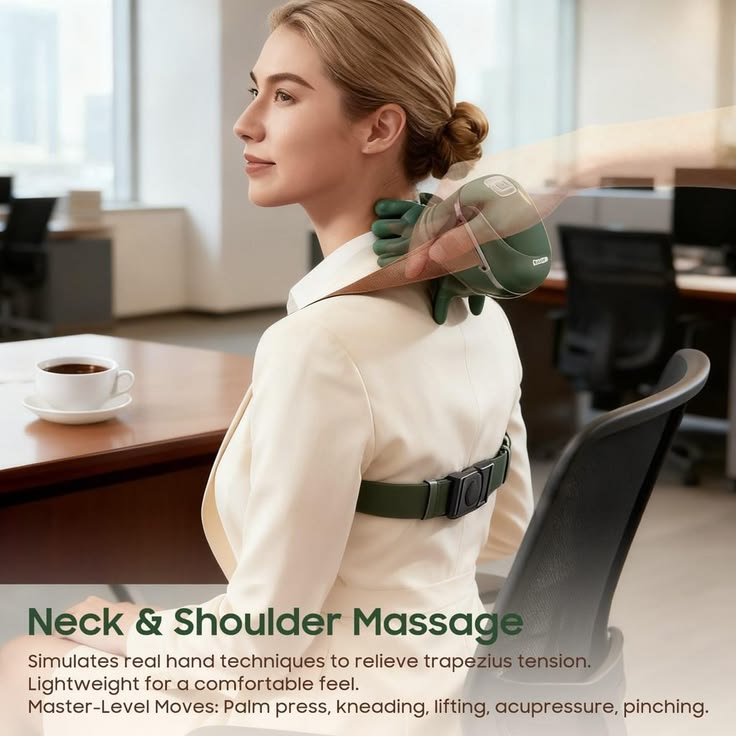
Choosing a neck and shoulder massager might seem straightforward at first, but the market is filled with devices that vary widely in design, intensity, features, and comfort. Some focus on deep tissue relief, others prioritize portability, and some aim to replicate human-like kneading as closely as possible. Without a clear understanding of what actually matters, it is easy to end up with a device that looks good on paper but does not match real-world needs.
A well-chosen massager should not only relieve tension but also fit into your lifestyle, support your posture habits, and remain comfortable over repeated use. This guide breaks down the essential factors to consider so you can find a device that genuinely works for your body.
Understanding Your Primary Pain Points
Before comparing features, the first step is identifying where and why you feel tension. Different devices are designed for different types of discomfort.
Occasional Stress Tension
If your discomfort comes mainly from stress or long workdays, you likely need a gentler device focused on relaxation and circulation improvement.
Chronic Neck Stiffness
For persistent stiffness, especially in the cervical spine and upper trapezius, deeper kneading and stronger pressure are more important.
Posture-Related Pain
If your pain is linked to desk work or “tech neck,” you need a massager that targets both the neck and shoulders with ergonomic alignment.
Types of Neck and Shoulder Massagers
Different designs serve different purposes Neck and Shoulder Massager. Understanding the main categories helps narrow your choice.
1. Wearable Wrap Massagers
These drape over the shoulders and often use kneading nodes and heat. They are ideal for home or office use and provide hands-free relaxation.
Best for:
- Desk workers
- Home relaxation
- Moderate to deep tension
2. Handheld Deep Tissue Massagers
These are manually guided devices that offer more control over pressure and targeting.
Best for:
- Targeted muscle knots
- Back and shoulder focus
- Users who prefer adjustable control
3. Wireless Neck Massagers
Cordless and portable, these are designed for mobility and convenience.
Best for:
- Travel
- Quick daily sessions
- On-the-go relief
4. Massage Pillows and Cushions
These are stationary devices that provide consistent pressure in a fixed position.
Best for:
- Relaxation at rest
- Evening use
- Lower intensity needs
Key Features That Actually Matter
Not all features are equally important. Some significantly impact effectiveness, while others are more about convenience.
1. Kneading Technology
Kneading nodes simulate human hand movements and are essential for deep muscle relief. Look for devices that offer:
- Rotating or 3D/4D kneading
- Variable direction movement
- Adjustable pressure depth
This ensures better targeting of tight muscle fibers.
2. Heat Function
Heat is one of the most valuable features in any massager. It helps:
- Relax tight muscles
- Improve blood circulation
- Enhance the effectiveness of kneading
A good device should offer safe, consistent, and adjustable heat levels.
3. Intensity Control
Different muscle conditions require different pressure levels. A quality massager should include:
- Multiple intensity settings
- Gradual adjustment options
- Gentle start modes
This prevents discomfort and allows long-term use.
4. Ergonomic Design
Fit matters as much as function. A poorly shaped device may miss key tension points.
Look for:
- Shoulder-contouring structure
- Neck curve alignment
- Stable positioning during use
Ergonomic design ensures consistent contact with muscles.
5. Noise Level
Quiet operation improves relaxation and usability, especially in shared spaces.
Brushless motor systems are typically quieter and smoother than older designs.
6. Battery Life and Portability
For wireless devices, battery performance determines convenience.
Consider:
- Runtime per charge
- Charging speed
- Weight and portability
Matching Features to Your Lifestyle
The best massager is not necessarily the most advanced one—it is the one that fits your routine.
Office Users
Prioritize:
- Quiet operation
- Quick 10–15 minute sessions
- Ergonomic neck support
Frequent Travelers
Prioritize:
- Lightweight design
- Cordless use
- Compact size
Home Users
Prioritize:
- Strong kneading function
- Heat therapy
- Longer session capability
Common Mistakes Buyers Make
Many users choose massagers based on marketing rather than actual needs.
Over-Focusing on Power
Stronger is not always better. Excess intensity can cause discomfort if not needed.
Ignoring Fit
Even powerful devices are ineffective if they do not align properly with the neck and shoulders.
Choosing Too Many Modes
Extra features are useful only if they are practical. Too many settings can make devices harder to use.
Skipping Heat Evaluation
Heat significantly enhances results, yet it is often overlooked during purchase decisions.
How to Evaluate Comfort Before Buying
Comfort is subjective, but a few indicators can help:
- Adjustable settings for different sensitivity levels
- Soft yet firm contact points
- Even pressure distribution
- Stable fit without shifting
A good device should feel supportive, not restrictive.
When a High-End Device Is Worth It
Premium massagers are justified when:
- You experience chronic or daily neck tension
- You need advanced kneading (3D/4D systems)
- You value quiet, smooth operation
- You want long-term durability
For occasional use, simpler models may be sufficient.
The Role of Consistency
Even the best massager will not deliver lasting results if used inconsistently. Short, regular sessions are more effective than occasional long ones.
A good device should be easy enough to use daily without effort or setup fatigue.
Building a Realistic Expectation
A neck and shoulder massager is a tool for relief, not a permanent cure. It works best when combined with:
- Better posture habits
- Regular movement breaks
- Proper workstation setup
- Stress management techniques
This combination produces the most noticeable long-term improvement.
Final Thoughts
Finding the perfect neck and shoulder massager is about balancing comfort, features, and real-life needs. The right device should fit naturally into your routine, target your specific tension points, and provide consistent relief without complexity.
By focusing on ergonomics, kneading quality, heat support, and usability rather than just marketing claims, you can choose a massager that genuinely improves daily comfort.
In the end, the best choice is not the most advanced device—it is the one you will actually use regularly and comfortably.