


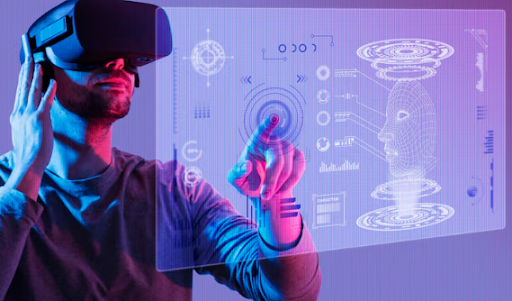
Bridging the Gap: Augmented Reality and the Future of Experiential Learning
Experiential learning, often defined as learning through reflection on doing, is a powerful pedagogical approach that moves education beyond passive reception of facts. In its traditional form, it requires physical engagement—from laboratory work to field trips.
Augmented reality (AR) is transforming this landscape by integrating digital content directly into the real world, creating rich, interactive, and risk-free environments that dramatically enhance the efficacy and reach of experiential learning.
By providing immediate, contextual feedback and enabling immersive scenarios, AR is fast becoming a core tool for educators and corporate trainers alike.
Making Abstract Concepts Tangible
A central challenge in many scientific and technical fields is the visualization of concepts that are either too small (molecular biology) or too large (planetary science) to observe directly. Augmented reality overcomes this hurdle by allowing users to overlay complex 3D models onto their physical environment.
For example, a student can point a tablet at a textbook to project a spinning, interactive model of a DNA helix or a virtual engine that can be disassembled layer by layer.
This direct manipulation and visualization fosters a deeper, intuitive understanding essential to genuine experiential learning.
Enabling Risk-Free Simulation and Practice
In high-stakes environments, such as medical training or complex equipment maintenance, mistakes carry severe consequences. AR creates safe, virtual overlays for practicing real-world procedures.
A surgeon can use AR to see patient data and planning overlays during a mock operation, or an industrial technician can practice calibrating a delicate machine by following visual instructions overlaid onto the actual equipment.
This simulation-based practice allows for repeated attempts and immediate feedback without consuming real resources or risking injury, which is critical for effective experiential learning.
Providing Contextualized, Just-In-Time Instruction
Traditional learning requires recalling information learned elsewhere. AR delivers instruction exactly where and when it is needed.
In a vocational setting, an apprentice mechanic can wear smart glasses that display step-by-step assembly instructions, torque specifications, and safety warnings overlaid on the specific engine part they are currently handling.
This ‘just-in-time’ guidance links theory directly to action, minimizing errors and speeding up the mastery of practical skills, thereby maximizing the efficiency of experiential learning.
Facilitating Virtual Field Trips and Exploration
Access to historical sites, geological formations, or specific professional environments is often limited by geography and cost. Augmented reality provides virtual access to these locations, enhancing curriculum delivery.
Students can scan a world map and see 3D models of historical artifacts placed around their classroom or explore virtual geological strata overlaid onto the schoolyard.
This capability democratizes access to diverse real-world contexts, turning any space into a valuable site for exploration and study.
Enhancing Collaboration and Shared Experience
AR tools promote collaboration by allowing multiple users to view and interact with the same digital content simultaneously.
A group of engineering students can gather around a physical prototype and collectively examine a shared digital model of its internal workings, with each member contributing annotations or manipulating the model from their own device.
This shared interactive experience encourages discussion, collaborative problem-solving, and a unified understanding of complex systems.
Personalizing the Learning Pace
AR applications can tailor the level of detail and complexity of the overlaid information based on the user’s proficiency level. Beginners might see simple, explicit instructions, while advanced users receive only subtle cues or complex data sets.
This personalized pace ensures that the user is neither overwhelmed nor bored, optimizing the challenge level to match their skills—a core tenet of effective learning—and helping individuals progress toward mastery efficiently.
